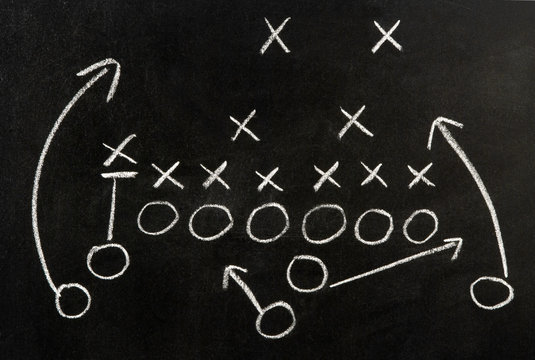
Illinois FCS coaches and players share their insights and experiences from between the halves.
By Dan Verdun
A field goal sails through the uprights as the first half expires. Players from both sidelines immediately jog into the tunnel to their respective locker rooms. The sideline reporter catches up with the harried head coach.
And somewhere in that quick, less-than-a-minute interview, the question is asked: “What halftime adjustments will we see when play resumes?”
As fans are about to enjoy hot dogs and the marching band, the players and coaches are preparing for a flurry of information and idea sharing.
“It’s organized chaos,” Eastern Illinois head coach Chris Wilkerson said.
Prairie State Pigskin talked to those involved to explore their first-hand look at the ins and outs of halftime adjustments.
What it looks like . . .
. . . from the head coach’s point of view
As fans prepare to watch the halftime show or make a trip to the concession stand, coaching staffs are already preparing for the 20-minute break.
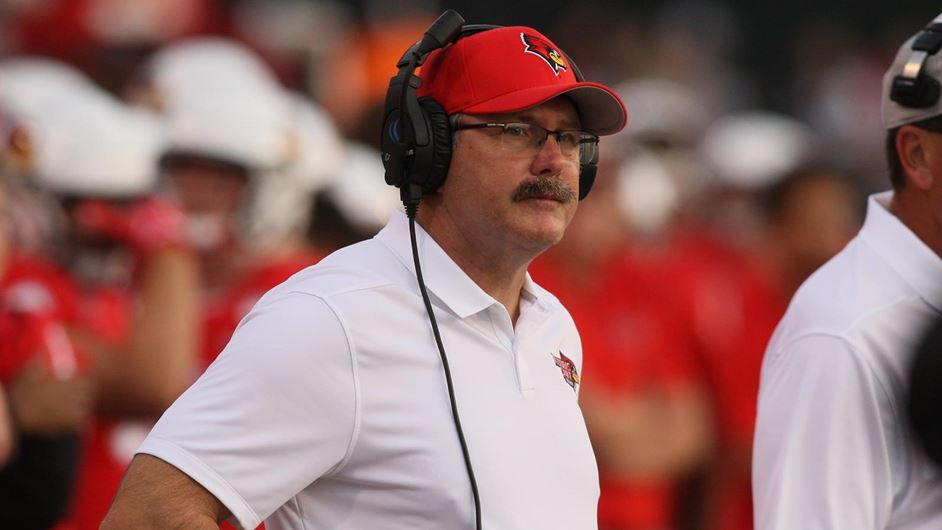
“It starts with the coordinators,” Illinois State head coach Brock Spack said. “With two or three minutes to go in the half, I tell them to start getting their thoughts together. Make sure your guys are getting ready. Make sure you’re putting your formations and plays on the board and get your adjustments ready. We’ll talk about it before we go in there.”
And once the game clock runs out, the scramble begins.
“The second that the game goes to the half, the players are working on hydration and with the trainers along with strength and conditioning staff,” Wilkerson said. “The coaches instantaneously gather as offensive and defensive staffs. Our associate head coach/special teams coordinator (Kyle Derickson) goes to see the specialists very quickly. I make my way around to the offensive staff and the defensive staff and talk to them about any notes that I have made during the first half.”
For Spack, a former Big Ten Conference defensive coordinator, halftime certainly means a conversation with the leader of that side of the ball.
“Usually I go to the defense right away. That’s where I hold my expertise,” he said. “I listen to what they’re saying. I might have a word or two on what needs to be done. But not very often. On offense, it’s the same thing. I’ll listen to their adjustments.”
Spack also places trust and responsibilities on his coordinators and assistants.
“It’s getting suggestions from the coaching staff really quick. You’ve got to let the coordinators lead those conversations. I might chime in,” he said.
For Wilkerson, it’s a game of cat-and-mouse.
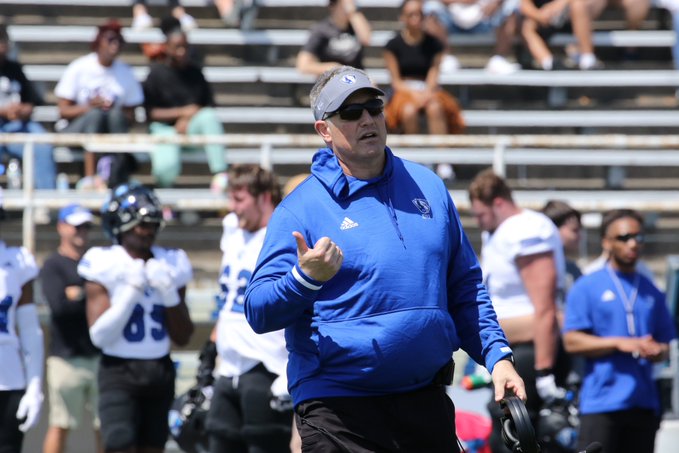
“They (the opponents) will probably also make an adjustment, so what are we going to use from our toolbox to counter that? It’s a chess match,” said the second-year EIU head coach.
The results of the first half certainly factor into the approach for the second half.
“Sometimes you’ve got a big lead, so you want to run the ball and grind the clock. Sometimes you’re chasing (points),” Wilkerson said.
Ultimately, the coaches’ conversations and strategies must be passed on to the players.
“I would try to keep things real simple,” Spack said, harkening back to his days as Joe Tiller’s defensive coordinator at Wyoming and Purdue. “Adjustments are part of the game.
“He (Tiller) gave us a lot of room to make our adjustments. That’s what was good about coaching for him. You learned a lot. He let you make mistakes and learn from them. He was very creative and he didn’t want to stifle creativity, so I try to do that (with my staff).”
After the players get their adjustments, position coaches will talk to their groups for clarification and refinement, Wilkerson said, all while the clock is ticking.
“Our director of operations and player development and strength and conditioning coaches are timing everything and calling out reminders of how much time remains (before we have to be back on the field),” he said.
What it looks like . . .
. . . from a coordinator’s point of view
Illinois State’s Tony Petersen has served as an offensive coordinator in five conferences – including the 2021 season at Illinois – during his career.
Analytics, he said, always play a role in halftime discussions.
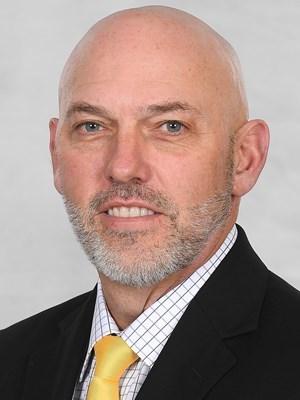
“We’ll go in right away and our GAs (graduate assistants) or our QCs (quality control coaches) will have things written down such as what the defense is doing on certain down and distances. What’s been good, what’s been bad,” Petersen said. “I have an idea from watching upstairs and keeping notes.
“We meet as an offensive staff. We talk about what adjustments we need to make and once we decide what those are, everybody goes and meets with their individual players and then we head back out.”
Like Petersen, EIU offensive coordinator Joe Davis has experience in a variety of programs.
“Our plan at halftime, first and foremost, is always to establish what we are doing well. It sometimes gets overrated. You do something early in the game and we as coaches don’t go back to it. We can’t see the forest through the trees sometimes when you have this elaborate plan,” Davis said.
The second order of business?
“Who needs to get the ball? Who on our offense are the playmakers – running backs, receivers, tight ends – that need more touches and then how can we get that guy the ball?” Davis said.
“The last part is, what in our game plan have we not gotten to yet?” he said. “(In our game preparation), we really like this and this and this. For whatever reason it hasn’t been called yet, or the defense spooked us out of it, but we need to make sure that we get it done.”
Clay Bignell was promoted to EIU defensive coordinator in March after serving as defensive pass game coordinator and safeties coach last season.

“You’re really going in and seeing how they’re attacking you. Where you’re weak and what answers that you can have to take away,” Bignell said. “So, you’re going in and tweaking things to take away from what the offense did to hurt you in the first half.”
Travis Niekamp is in his sixth season as ISU’s defensive coordinator.
“Sometimes (adjustments are) pretty minor. Every once in awhile it’s pretty major,” Niekamp said. “But, for the most part if we’re doing a good job during the course of the week and staying consistent throughout the course of the season, it’s never too dramatic. It’s more about tweaking. There’s not a lot of panic.
“We look at it as how do we start the first half, and how do we start the second half? Historically, we’ve always been pretty good with that. At least with getting stops (and forcing punts or turnovers).”
What it looks like . . .
. . . from a player’s point of view
Quarterback Zack Annexstad transferred to ISU after playing for the Big Ten’s Minnesota Golden Gophers.
“I’ll eat a quick little snack, whether it’s pretzels or a candy bar or something to get my sugar back up,” Annexstad said. “Coach Petersen will tell us quarterbacks what he’s seeing and what to expect for the second half.
“I try to chill out as much as possible. I let myself relax for a minute and then get back going.”
Senior defensive lineman Josh Dinga has seen positive results from halftime strategy sessions.
“A great example of that happened against Western Illinois last year. We were having some issues defending the C gap (outside the offensive tackle). We adjusted that at halftime, and we ended up playing a lot better,” he said.
The best laid plans
All the coaches agreed that the week of preparation and practices lead to the most success more often than not.
“You go into each week with a plan. You hope that what you practiced and prepared works out,” Wilkerson said. “If not, and we talk to the players about this all the time, it’s about monitoring and adjusting. Adjust and improvise. Adapt and overcome. We’re trying to find a way to find something that’s going to give us a chance in the second half.”
Certainly a wide array of factors – ranging from injuries to weather to longer halftimes for special events – may alter a team’s plans.
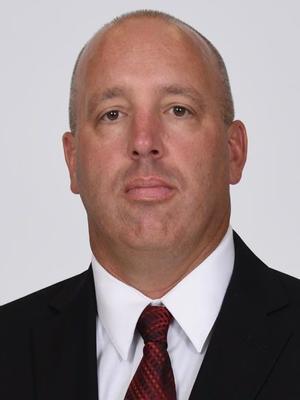
“All of the best plans go to hell in a handbasket when you hit the beach,” said Spack, who holds an undergraduate social studies degree from Purdue. “And that’s what a football game is like, you’re hitting the beach. Sometimes things get blown up. You have to be able to say it’s not working out and make adjustments.”
EIU’s Bignell said, “You could be (forced) out of some packages depending on who the injured player is.”
ISU’s Niekamp added, “I think there’s a lot of forward thinking going in with the game plans. What we bring into the first half is what we think is going to be really, really good versus what an opponent is doing. If there’s a problem, that’s where the forward thinking has to come in. As a coordinator, I’m always trying to shoot issues into what we’ve been doing and (figure out) the solutions.
“It’s more of what are we doing, what is affecting us and what do we have in our package that can help us. The thing that gets really hairy is when you’re trying to do something new that you haven’t practiced.”
Sometimes less really is more
There is a perception that halftime adjustments turn the tide of games the likes of what happens in Hollywood sports movies.
Davis downplays that idea.
“Much of it is based upon the stadium that you’re playing in,” he said. “How soon you can even get coaches together to make those adjustments. You might have a slow elevator. You might have no elevator. They may be bringing coaches down from the box in tiers. The head coach might be grabbed by the media coming off the field.

“So when fans and folks in general are watching a game that perceives massive halftime adjustments, it’s a little bit overrated.”
Davis, in his 16th season as an offensive coordinator, noted that, “Football is such a momentum game. A team can be really hot one half and cold the next. We, as coaches, are always searching for that consistency. Sometimes it’s a slight change in personnel. Maybe it’s a quarterback or running back change that ignites the offense or the defense one way or another.
“This is year 20 for me (as a coach). I’d have to think long and hard about a miraculous halftime adjustment that we made. More often than not, it’s we continued to do what we do well. Let’s make sure our good players are touching the football. Let’s make sure that we give the plan that we put together a shot to work in the second half.”
Teams very rarely abandon what they prepared for all week and draw up a new plan of attack.
“You can’t chase ghosts,” Niekamp said. “Matchups are probably the biggest thing. Sometimes the adjustment is less, not more.”
Wilkerson said, “You’re typically dealing with 20 minutes maximum, so while things are pretty helter skelter, you’ve got to get a lot of things done in that time frame. It’s just the nature of what we do.”
Dan Verdun is a co-founder of Prairie State Pigskin. He has written four books: NIU Huskies Football, EIU Panthers Football, ISU Redbirds Football and SIU Salukis Football.
Find us on social media!
Twitter: https://twitter.com/PSPigskin
Facebook: Prairie State Pigskin
 Prairie State Pigskin
Leave a comment